
CALL US
BIRTH CERTIFICATE ATTORNEYS · GREENSBORO, NC
Changing a North Carolina birth certificate? We handle the legal side.
A new name. A parent to add. An adoption to record. Changes like these usually need a court order before the state will update the certificate. Camino Law prepares the case, gets it in front of the right court and follows through with N.C. Vital Records.
Confidential consultations
Call or text us anytime
Se habla español
Confidential consultations
Call or text us anytime
Se habla español
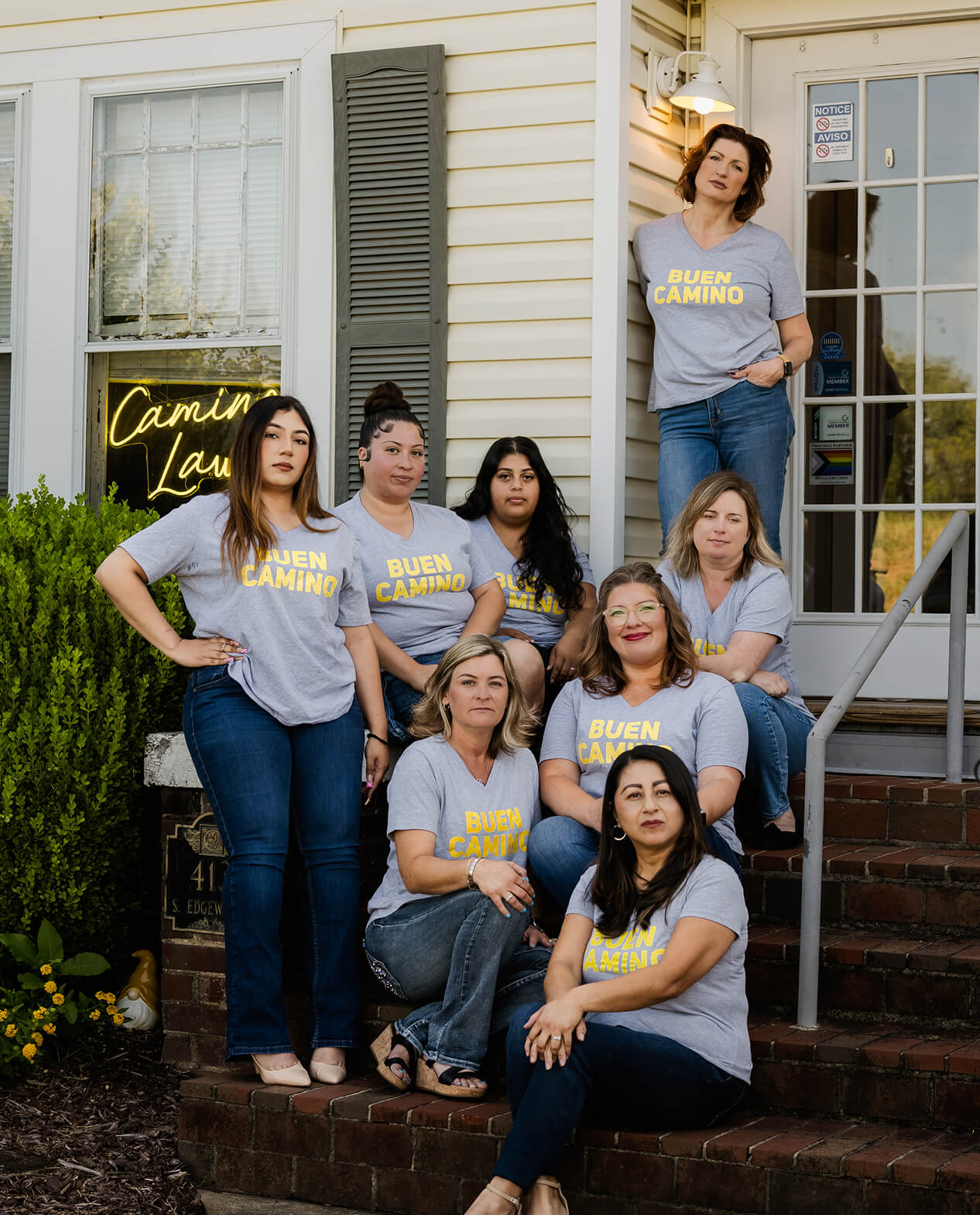


- Serving Greensboro since 2019A family law firm in a restored house on S. Edgeworth Street
- Super Lawyers Rising StarsAbigail C. Seymour, selected 2025 and 2026
- Featured in PEOPLEProfile of Abigail and her all-women firm, July 2026
- English y EspañolA bilingual team from first call to final paperwork
WHAT WE HANDLE
Three kinds of changes, each with its own legal route.
A birth certificate follows you everywhere: school enrollment, passports, benefits, inheritance. When it no longer matches your family, here is how it gets fixed.
01
A name change
For parents changing a child's name, and adults changing their own
A name on a birth certificate changes through a court-ordered name change. We prepare the petition, guide you through the consent and notice requirements, and get the certified order to Vital Records so the certificate can show the new name.
Petition and supporting documents
Consent and notice requirements
Certified order sent to Vital Records
02
Adding or changing a parent
For fathers, mothers and families whose legal parentage has changed
When both parents agree, an Affidavit of Parentage may be all it takes. When one can't or won't sign, the child is already an adult, or a parent has died, a court order establishing paternity is usually needed. We tell you which applies and handle the court process.
Establishing paternity
Adding a father's name
Updating the record after a court order changes parentage
03
After an adoption
For adoptive parents and stepparents
Once an adoption is final, the state prepares a new birth certificate with the adoptive parents and the child's new name. We gather the supporting documents, handle the filings, and sort it out if the new certificate is held up or comes back with a mistake.
Post-adoption certificate updates
Document gathering and filing
Fixing delays and errors
Don't see your situation? Tell us anyway.
DO I NEED A LAWYER?
Some changes are a form. Others need a judge's signature.
North Carolina Vital Records can update certain details when you send the right documents. But under state rules, a change to a surname or to a child's parentage generally requires a court order first. That is where most people get stuck, and it's the part we do.
OFTEN HANDLED DIRECTLY
With Vital Records
Small corrections backed by documents, an Affidavit of Parentage signed by both parents, or a legitimation after the parents marry.
USUALLY NEEDS A COURT ORDER
Through the courts
A legal name change, establishing paternity when a parent can't or won't sign, changes after the child turns 18, and corrections Vital Records won't make on its own.
Not sure which side you're on? That's the first thing we work out with you. Tell us what you need
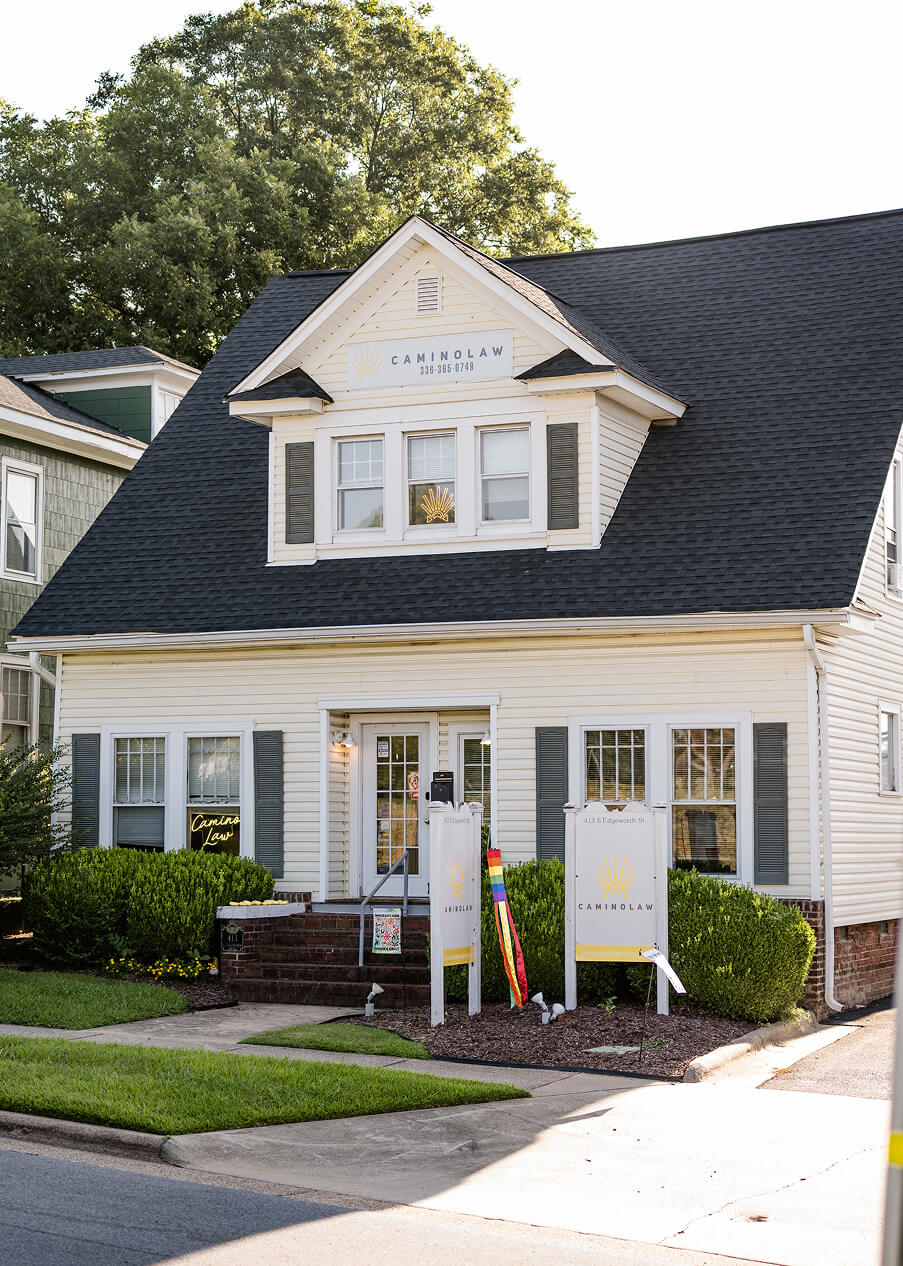

413 S. Edgeworth Street, Greensboro. There's a playroom inside, with books and art supplies.
OUR APPROACH
We keep the focus where it belongs: on your child.
We are moms, daughters, sisters, aunts and friends of children. Our work puts an emphasis on protecting and advocating for them, and that shapes how we handle every custody matter.
AGREEMENT FIRST
A plan two parents build usually lasts longer than one a judge imposes. We work toward agreement wherever it's safe and realistic.
READY FOR COURT
Some cases need a judge. When yours does, we prepare thoroughly and represent you there.
YOU CAN REACH US
Our phones are answered 24/7, and clients have a secure messaging portal to contact the team directly.
A CALM PLACE TO LAND
We're a trauma-informed firm. The office is designed to be calming, and children are welcome to come along.

MEET ABIGAIL SEYMOUR
A working mother who went to law school to do this differently.
Abigail Seymour started law school at 47, as a working mother of two. She earned her J.D. from Elon University School of Law in 2017 and founded Camino Law in 2019 with a clear idea of what family law could feel like for the people going through it.
She serves on the board of the Children's Law Center of Central North Carolina, and she leads an all-women, bilingual team that handles custody matters every day.
“You can change how you practice it.”
ABIGAIL SEYMOUR, FOUNDER & LEAD ATTORNEY
EDUCATION
J.D., Elon University School of Law · New York University
RECOGNITION
Super Lawyers Rising Stars, 2025 and 2026 · Greensboro Bar Association Pro Bono Award, 2022
COMMUNITY
Board member, Children's Law Center of Central North Carolina
LANGUAGES
English and Spanish
Abigail works alongside attorneys Melissa Buck and Kate Mendez. Read her story in PEOPLE

CLIENT REVIEWS
What parents and clients say, in their own words.
These are pulled straight from Google and shown unedited. Every case is different, and past results don't predict future ones.
HOW IT WORKS
From your first call to the updated record.
-
1
You tell us what needs to change
Send the short form or call. Which certificate, and what it should say instead.
-
2
We map the route
An attorney reviews your documents and tells you whether you need a court order, which court handles it, and what it will involve.
-
3
We prepare and file
Petitions, supporting documents and court appearances where they are needed. You always know what stage things are at.
-
4
The record gets updated
Once the order is in hand, it goes to N.C. Vital Records with the request to amend the certificate.
COMMON QUESTIONS
Straight answers about custody in North Carolina.
General information to get you oriented. For advice about your own situation, talk with one of our attorneys.
Custody is decided case by case, based on the best interests of the child. A court looks at things like each parent's relationship with the child, who can provide a safe and stable home, and any history of abuse. Neither parent starts with an advantage because of their gender.
Not necessarily. Parents can agree on a parenting plan themselves, with attorneys making sure it is complete and workable. In contested cases, most North Carolina counties send parents to custody mediation before a judge hears the case. If no agreement is reached, the court decides.
Yes, but not simply because one parent wants a different arrangement. The parent asking has to show a substantial change in circumstances that affects the child, and that the new arrangement is in the child's best interests.
You can file a motion asking the court to enforce it. The judge looks at whether the order was violated and decides how to respond, which sometimes includes changing the order.
An informal arrangement works until it doesn't. Without an order there is very little a court or the police can enforce. Putting your arrangement in writing protects your child and both parents if things change later.
Only in serious situations: when a child faces a substantial risk of bodily injury or sexual abuse, or is likely to be taken out of North Carolina to avoid the courts. Emergency orders are temporary and followed by a hearing. If a child is in immediate danger, call 911.
Family law consultations are $150 to $300, depending on the type of case and the attorney. During that meeting an attorney reviews your situation, explains your options and recommends a plan. If you hire us, the fee is credited to your case.
Sí. Somos un bufete bilingüe y nuestro equipo puede atenderle en español desde la primera llamada.
Our office is in downtown Greensboro, and we serve clients in Greensboro, Guilford County and the surrounding areas.
This information is general and is not legal advice. Laws change and every situation is different.
REQUEST A CONSULTATION
Talk to someone who will listen first.
Tell us a little about your child and what's going on. A member of our team will contact you to set up a confidential consultation with an attorney.
No pressure and no obligation to hire us
Consultation fee credited to your case if you do
Available in English or Spanish
If you or your child are in immediate danger, call 911.
PREFER TO TALK?
Phones answered 24/7
OFFICE
413 S. Edgeworth Street
Greensboro, NC 27401
OFFICE HOURS
Mon to Thu 8:30 am to 5:00 pm
Fri 8:00 am to 2:00 pm
How can we help?
Takes about a minute. All fields are required.
FIRST NAME
LAST NAME
PHONE NUMBER
WHAT DO YOU NEED HELP WITH?
100% Privacy Guaranteed. We use your details only to respond to your inquiry. See our Privacy Policy.
PREFER TO TALK?
Phones answered 24/7
OFFICE
413 S. Edgeworth Street
Greensboro, NC 27401
OFFICE HOURS
Mon to Thu 8:30 am to 5:00 pm
Fri 8:00 am to 2:00 pm

CONTACT
336-365-0749
413 S. Edgeworth Street
Greensboro, NC 27401
Attorney advertising. The information on this page is for general purposes only and is not legal advice. Viewing this page or contacting Camino Law does not create an attorney-client relationship. Past results and client reviews do not guarantee a similar outcome. Attorney responsible for this content: Abigail C. Seymour, Camino Law, 413 S. Edgeworth Street, Greensboro, NC 27401.
© 2026 Camino Law. All rights reserved. · Privacy Policy · Terms of Use